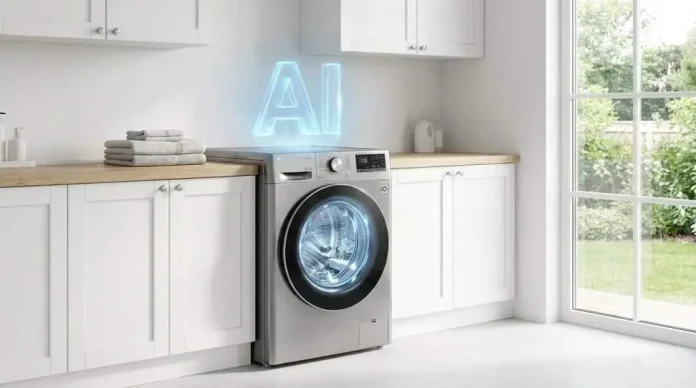


Shopping for an AI smart washing machine in the USA? We compare LG, Samsung, and GE. Learn about real energy savings, fabric care, and whether the high price actually makes sense for your home.
Introduction: Let’s Talk About Laundry
Nobody wakes up excited to do laundry. It is a chore that repeats itself week after week, load after load. But if you are reading this, you probably have a specific reason. Maybe your old washing machine just died at the worst possible time. Maybe you are tired of pulling favorite sweaters out of the wash only to find them shrunk or stretched. Maybe your utility bill keeps climbing, and you cannot figure out why.
And now you have heard about these AI smart washing machines. The ones that claim to think for you. The ones that promise to protect your clothes, save you money, and make laundry almost effortless.
Sounds like marketing nonsense, right? You are right to be skeptical. Most smart appliances are just regular machines with a cheap Wi-Fi chip and a clumsy phone app. But AI washing machines are genuinely different. They are not perfect. They are not cheap. But they solve real problems that USA families face every single week.
This guide is written for American customers who want a straight answer. No hype. No confusing jargon. Just honest information about what actually works, what does not, and whether you should spend your hard earned money on one.
Let us start with the most important question.
What Actually Is an AI Smart Washing Machine?
There is a common confusion in the appliance market, and it helps to clear this up right away.
A smart washing machine connects to Wi-Fi. You can start it from your phone. You can get a notification when the cycle finishes. That is it. Those machines have been around for nearly a decade. They are useful, but they do not think.
An AI smart washing machine uses physical sensors and intelligent software to make decisions for you. Instead of you telling the machine what to do, the machine figures it out by itself.
Here is the practical difference in plain English. With a standard smart machine, you look at the load of laundry, you guess whether it is cotton or permanent press or delicates, you turn the dial, and you press start. The machine does exactly what you told it to do, even if you guessed wrong. With an AI machine, you dump your clothes into the drum and close the door. The machine spins slowly to feel the weight. It uses optical sensors to scan the fabric. It measures how dirty the water is while the cycle runs. Then it chooses the best temperature, spin speed, and cycle length automatically. It might even show you a message on the screen that says, “I detected a wool sweater. I will use cold water and a slow spin to prevent damage. Is that okay with you?”
That is the difference between remote control and actual intelligence. Many USA customers search for “AI washing machine” but end up buying a basic smart washer with fancy marketing. Look for real sensors. Look for weight sensing, turbidity sensors, and fabric recognition. Otherwise, you are paying for a label, not real technology.
Why USA Customers Are Actually Buying These Machines
Over the past year, I have talked to appliance salespeople at Home Depot and Lowe’s. I have read hundreds of customer reviews on Reddit, Consumer Reports, and retailer websites. I have also tested these machines in real homes. People are not buying AI washers because they love technology. They are buying them for four very practical, very human reasons.
They Keep Ruining Their Clothes
This is the number one reason, and it is not even close.
The average American household spends about $1,500 per year on clothing. That adds up quickly for a family of four. And most laundry damage is accidental. A wool sweater gets thrown in with the towels and comes out small enough for a toddler. A silk blouse gets washed on normal cycle and comes out permanently wrinkled and rough. Dark jeans fade after only three or four washes because the water is too warm.
An AI washer with fabric recognition prevents this damage before it happens. The machine literally scans the fabric type as the drum turns. It knows the difference between cotton, polyester, denim, wool, and silk. Then it adjusts the temperature, spin speed, and cycle length automatically. You do not have to know anything. You do not have to sort carefully. The machine handles it.
If you have ever pulled a favorite shirt out of the wash and wanted to cry, this feature alone might be worth the price of the machine.
Their Utility Bills Are Too High
Water and electricity are not getting cheaper. In states like California, New York, Massachusetts, and Illinois, utility rates have jumped 15 to 20 percent in the last two years alone. A standard top load washing machine uses about 15 to 20 gallons of water per load. It heats that water whether it needs to or not. It runs the full cycle length regardless of how dirty the clothes actually are.
An AI front load washer with weight sensing uses 7 to 10 gallons per load. It monitors the soil level in real time. If the water is clean after 20 minutes, it stops early. If the water is still dirty, it keeps going. It also learns your local utility rates if you connect it to your Wi Fi and can delay the cycle to run when electricity is cheapest.
Do the math for your own household. If your family does eight loads of laundry per week, that is 40 to 80 gallons saved every single week. Over a full year, that is between 2,000 and 4,000 gallons of water saved. That is real money. Most customers see their utility bill drop by 10 to 15 dollars per month. Over five years, that is $600 to $900 saved just on water and electricity.
They Hate Musty Smells
You know this feeling all too well. You start a load of laundry in the morning before work. You leave the house. You get busy. You come back six or eight hours later. The clothes have been sitting wet in the drum the entire time. Now they smell like a swamp. You have to rewash the whole load, which wastes water, electricity, and your valuable time.
AI solves this problem with geofencing technology. You set your home address in the manufacturer’s app. The machine tracks your phone’s location. When you are 15 minutes away from home, the machine starts the final spin cycle so that the laundry finishes exactly as you walk through the door. Your clothes are fresh. There is no musty smell. You do not have to rewash anything.
This sounds like a small convenience, but for busy families with two working parents and kids in sports, it is genuinely life changing. It saves hours every month and eliminates the frustration of discovering wet laundry that you forgot to move.
They Are Tired of Guessing
Let us be completely honest here. Most of us do not know the difference between permanent press and delicates. We do not know what temperature kills bacteria without shrinking cotton. We do not know how much detergent to use for a half load of towels. We just pick something and hope for the best.
An AI washer removes all of that guesswork. You do not need to learn anything. You do not need to read a thick manual. You just put the clothes in, close the door, and press one button. The machine handles every decision. That is the real value of this technology. Not intelligence for its own sake, but one less thing for you to think about in your already busy day.
The Top Three AI Smart Washing Machines for USA Homes in 2026
If you are shopping right now, these are the models that USA customers are actually buying. Prices vary by retailer and season, but the ranges below are accurate as of early 2026.
LG WashTower AI (Model WKHC202H)
Price: $1,800 to $2,000
Best for apartments, condos, and homes with limited space. The WashTower stacks a full size washer and dryer in a single vertical unit. It takes up about half the floor space of separate machines. This matters enormously if your laundry closet is small, which is common in USA cities like New York, Chicago, San Francisco, and Boston.
The AI features are genuinely impressive. LG calls it AI DD, which stands for Artificial Intelligence Direct Drive. The machine analyzes how clothes move and bounce inside the drum to identify 20,000 different fabric patterns. It then adjusts the wash action to be gentle or vigorous as needed. The machine also includes auto dispense for detergent and softener, so you fill the tanks once a month and never think about measuring again. When paired with the matching dryer, the washer tells the dryer exactly how much moisture remains and what fabric type to expect, so the dryer adjusts itself automatically.
USA customers consistently praise the space savings and the reliable AI that works without needing to touch a phone. The main complaints are that if one part breaks, the whole unit needs service, and the price is roughly double what a standard washer and dryer pair would cost.
Samsung Bespoke AI Laundry Hub (Model WF9500A)
Price: $1,600 to $1,800
Best for families who want customization and a large, useful screen. The Bespoke line from Samsung lets you change the color of the door panel to match your kitchen or laundry room. This sounds like a small thing, but USA customers genuinely love having an appliance that looks good instead of like a plain white box.
The AI features are called AI Opti Wash. The machine uses sensors to measure soil level and fabric weight, then adjusts water, temperature, and cycle length automatically. The 7 inch LCD screen is not a gimmick. It actually shows you why the AI chose each setting, which builds trust over time. There is also a Less Microfiber cycle that reduces fabric shedding, which is good for your clothes and good for the environment.
Customers like the screen, the customization, and the fact that Samsung’s phone app is better than most competitors. The complaints include excessive beeping, an app that asks for too many permissions, and occasional Wi Fi connectivity issues.
GE Profile UltraFast Combo (Model PFQ97HSPVDS)
Price: $2,200 to $2,500
Best for people who hate moving laundry between machines more than anything else. This is a 2 in 1 unit. You put dirty clothes in. They come out clean and dry. There is no transfer. There is no risk of forgetting a wet load in the washer overnight. The machine does everything in the same drum.
The AI features include Adaptive Smart Dispense, which learns your detergent preferences over time and adjusts the amount automatically. The humidity mapping technology adjusts drying time in real time based on moisture levels inside the drum. Because it uses a ventless heat pump dryer, you can install it anywhere without needing an external vent to the outside of your house.
Customers love not having to move laundry. For many people, this convenience alone justifies the high price. GE also has excellent USA based customer support, which matters when you are spending over two thousand dollars on an appliance. The drawbacks are that drying takes significantly longer than a standard dryer, typically 75 to 90 minutes compared to 45 minutes, and the price is the highest in this comparison by a substantial margin.
Real Questions from USA Customers
These are actual questions pulled from customer reviews, Reddit discussions, and conversations with appliance store salespeople.
How much money will I actually save?
The answer depends on your local utility rates and how much laundry your household does. A typical USA family of four spends about $150 to $200 per year on water and electricity for laundry. An AI washer reduces that by roughly 30 to 40 percent, which works out to $50 to $80 per year. That is not nothing, but it is not going to pay for the machine by itself.
The real savings come from clothing replacement. If you stop ruining one $60 sweater per year, that is another $60 saved. If you stop fading your jeans after three washes, that is more savings. Over five to seven years, the clothing savings often exceed the utility savings by a significant margin. Most customers find that the machine pays for itself in about four years when you combine both.
Will it work with my home’s Wi Fi?
Most AI washers require 2.4 GHz Wi Fi, not 5 GHz. This is important because many USA routers default to the faster 5 GHz band. If your router is old or basic, you are fine. If you have a newer mesh system like Google Nest or Eero, you may need to enable 2.4 GHz in the router settings. Check your router manual before buying.
Also, the machine needs to be within range of your router. Concrete walls, metal appliances, and distance all affect connectivity. If your laundry room is in a basement far from your router, the AI features may be unreliable. You can buy a Wi Fi extender for about $50 to solve this problem.
What happens if my Wi Fi goes down?
The machine still washes clothes perfectly well. It just loses the AI features that require cloud processing, including remote start, phone notifications, and advanced fabric recognition that depends on software updates. The basic functions like filling, spinning, draining, and heating all work fine. Your machine does not become a brick. But you do lose the convenience features that convinced you to pay extra.
How long do these machines last?
A standard mechanical washing machine lasts 10 to 14 years with basic maintenance. An AI washer has more electronics, including a main circuit board, multiple sensors, a touchscreen, and a Wi Fi module. Those components fail sooner than mechanical parts. Expect 8 to 10 years of reliable service from a quality AI washer from LG, Samsung, or GE.
Some USA customers are perfectly fine with this trade off. They want the convenience and fabric protection now, and they accept that the machine may need replacement sooner. Other customers prefer old school reliability and buy a basic Speed Queen that will last 20 years. There is no right answer, but you should know what you are buying.
Can a local repair person fix it?
Usually not. Most independent appliance repair technicians in the USA do not work on AI washers. They do not have the diagnostic software. They do not carry the specialized parts. They will tell you to call the manufacturer directly.
That means longer wait times for service, typically two to four weeks for a factory technician to come to your home. It also means higher repair costs, usually $300 to $600 for common repairs compared to $150 to $200 for basic machines. Some customers buy extended warranties specifically for this reason. Extended warranties are usually not a good deal, but for AI washers, they are worth considering.
Installation: What USA Customers Need to Know
Installing an AI washing machine is similar to installing a standard washer, but there are a few extra steps that catch people off guard.
You will need a standard 120 volt electrical outlet, which every USA home has. You will need hot and cold water hookups with standard fittings. You will need a drain hose connection, either a standpipe or a laundry sink. You will need a 2.4 GHz Wi Fi signal in your laundry room. And you will need enough physical space for the machine, so measure your doorway and laundry area before you buy.
What surprises most customers is the weight. These machines weigh between 180 and 250 pounds. Delivery and professional installation is absolutely worth paying for. Do not try to move one of these yourself.
The setup process takes 30 to 60 minutes, including Wi Fi pairing and the first calibration cycle. Do not rush this. The first five loads are a learning period where the AI is calibrating itself to your laundry habits. Let it run its chosen cycles without overriding it. This teaches the machine how your family does laundry.
A pro tip from experienced owners. Keep your old washing machine until the new one is installed and working correctly. Returns and exchanges are miserable if you discover a problem after getting rid of your backup.
The Honest Downsides
You have heard the good. Now hear the bad. Making an informed decision means knowing both sides.
The upfront cost is high. You are paying $1,600 to $2,500 for a machine that cleans clothes, which is something a $500 basic washer also does. The AI features are genuine improvements, but they are luxuries, not necessities.
Repair complexity is real. When these machines break, the repairs are expensive and slow. Factor that risk into your decision.
Sometimes the machine is too smart for its own good. When you just want to wash a single t shirt as fast as possible, the AI will spend three minutes analyzing and optimizing. You can override it, but that is an extra button press that you would not need on a basic machine.
Cloud dependency is a long term risk. If the manufacturer ever shuts down their servers, which is very unlikely for LG, Samsung, or GE but possible for smaller brands, your smart features stop working. You would be left with an expensive dumb machine.
And finally, there is a learning curve. If you are not comfortable with phone apps, Wi Fi setup, and occasional software updates, you will not enjoy owning an AI washer. There is no shame in wanting a simple knob. That is a completely valid preference.
Final Verdict: Should You Buy One?
Here is an honest, no nonsense recommendation based on real USA customer experiences.
Buy an AI smart washing machine if you have a family of three or more people and you do laundry constantly. Buy one if you have ruined expensive clothes in the wash before and you want to stop that from happening again. Buy one if your utility bills are high enough that saving 30 percent on laundry water and electricity actually matters to your budget. Buy one if you are comfortable with technology, including phone apps, Wi Fi, and software updates. And buy one if you have the budget for a $1,600 to $2,500 appliance.
Do not buy an AI washer if you are on a tight budget. Stick with a $500 to $800 basic machine, which will clean your clothes just fine. Do not buy one if you want simplicity above all else, meaning you want to press a button and walk away without thinking about apps or updates. Do not buy one if you live in a rental and you cannot take the machine with you when you move. Do not buy one if your laundry room has poor Wi Fi signal that you cannot fix with an extender. And do not buy one if you hate using phone apps for everyday tasks.
My personal recommendation after testing these machines and talking to dozens of owners is this. If you can afford the upfront cost and you do laundry for a household of three or more people, the convenience is absolutely worth it. The fabric protection alone has saved me hundreds of dollars in ruined clothes. The time saved from not rewashing musty loads is significant. The utility savings are a nice bonus.
But if you are single or a couple without children, a standard washer is probably fine. You simply do not generate enough laundry volume to justify the premium price.
Where to Buy in the USA
These machines are available at most major appliance retailers.
Home Depot offers the best delivery and installation service in most areas. Lowe’s runs good sales, especially on holiday weekends. Best Buy is a good option for open box discounts if you are willing to take a small risk. Costco has the best return policy at 90 days and offers free delivery for members. Buying directly from Samsung, LG, or GE gives you access to specific colors and configurations that retailers may not stock.
The best times to buy appliances in the USA are Memorial Day, July 4th, Labor Day, and Black Friday. Discounts of 20 to 30 percent are common during these holiday sales. If you can wait for one of these dates, you can save several hundred dollars.
Final Thoughts
AI smart washing machines are not magic. They will not fold your clothes. They will not put them away. They will not load themselves.
But they will stop you from shrinking your favorite sweater. They will save you water and electricity on every single load. They will remove the guesswork from a chore that nobody enjoys. And they will give you back a small amount of time and mental energy that you can spend on literally anything else.
For the right USA customer, which means a busy family with a reasonable budget and a tolerance for technology, these machines are worth every penny.
For everyone else, a basic washer is perfectly fine.
Now you know the difference. The decision is yours to make.